
Key Takeaways
- If you have a Medicare Advantage plan or a Part D plan, you will receive your Annual Notice of Change (ANOC) by mail by the end of September.
- Your ANOC includes any cost and benefit changes to your plan for next year.
- It’s critical to read the entire ANOC before deciding to shop around for a new Medicare Advantage plan.
As a Medicare beneficiary, you’ll soon find a crucial document in your mailbox (or email inbox): the Annual Notice of Change (ANOC). Sent by your Medicare Advantage (Part C) or Prescription Drug (Part D) plan each September, your ANOC is not junk mail. In fact, it’s your essential guide to understanding how your Medicare benefits and coverage will change for the upcoming year. This will directly impact your choices during the Medicare Annual Enrollment Period (AEP), also known as the Medicare Open Enrollment Period.
The ANOC is sent by your insurance company to detail any changes to your Medicare Advantage plan or Medicare Part D plan that will go into effect in January. You should use the ANOC to evaluate if your plan is still the right fit for you or if it’s time for new coverage. The ANOC consists of four main topics:
- Medicare coverage changes,
- Provider network changes,
- Medication list and pharmacy network changes,
- Cost changes.
How to Read Your ANOC
Your ANOC provides important information that can affect your budget and healthcare during the next plan year. When reading your ANOC, you should:
- Verify your Medicare premium for next year.
- Check your Medicare out-of-pocket maximum.
- Review your Medicare formulary for prescription drug changes.
- Confirm your doctors and pharmacies are still in your Medicare provider network.
- Note any changes to your Medicare benefits or coverage.
ANOC Medicare Advantage Trends in Recent Years
Some of your favorite perks of Medicare Advantage – special benefits like fitness programs, over-the-counter spending cards, and dental, vision, and hearing coverage – might be reduced or eliminated for 2027. Insurers have announced these changes as a way to make up for rising costs and lower-than-expected federal reimbursements. Some plan to reduce benefits so they can hit their profit goals.
Insurers are making additional cost-cutting changes that could impact you.
- Some carriers are leaving states altogether – about three million beneficiaries lost their plans in 2026. This change is hitting rural areas the hardest.
- Beneficiaries have an average of $900 in increased spending in recent years because of changes like higher out-of-pocket limits, more cost sharing for healthcare services and drugs, and reductions in the Part B Giveback (where your carrier covers a portion of your Part B monthly premium).
Key information to look for in your ANOC
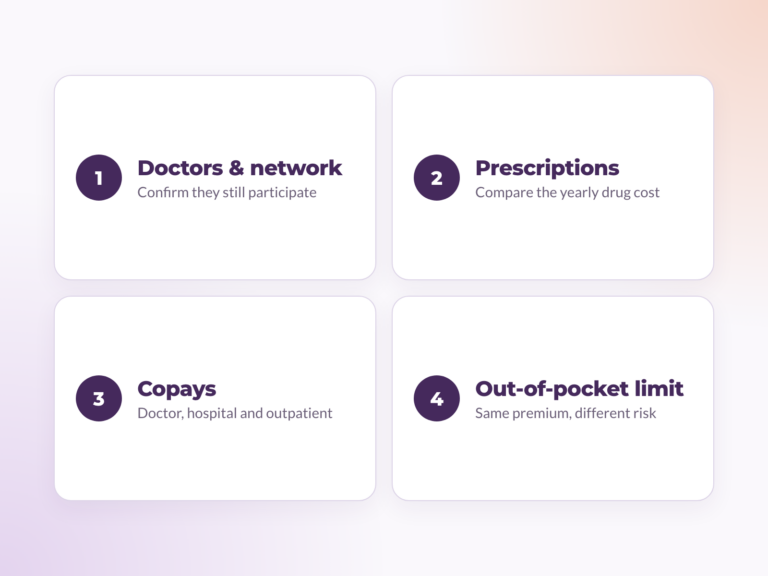
There are four key questions to ask when you’re reviewing your ANOC to understand whether you might need to change plans next year. You’ll want to make sure: your costs fit within your budget, your healthcare providers are still in-network, your prescriptions are covered, and the plan is still available in your state.
Are my premiums or other costs changing?
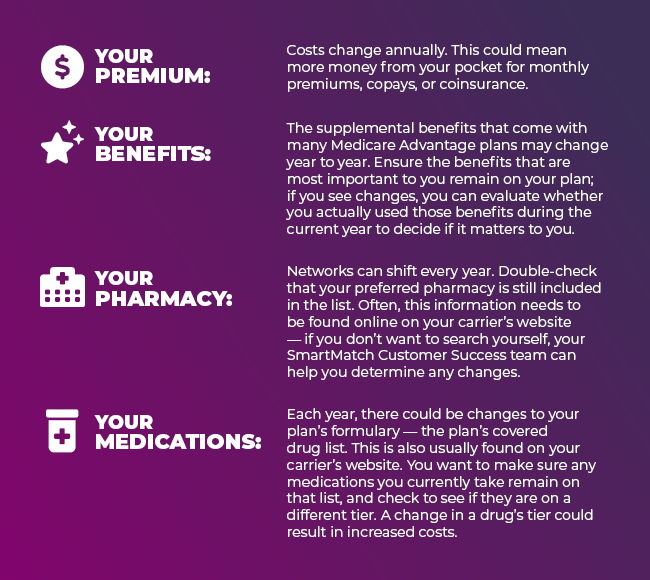
Your plan premium, co-pays, out-of-pocket maximums, and deductibles are all the costs you are responsible for under your Medicare Advantage plan or Part D plan. A higher premium or out-of-pocket maximum could significantly impact your healthcare budget. Insurance companies typically update their premiums annually. The ANOC will notify you if there has been an increase in your monthly premium for the coming year, as well as any changes to out-of-pocket costs and deductibles.
If the total of the new premium and out-of-pocket maximum is more than you’re comfortable with, you might want to reconsider your healthcare coverage. You can likely find a similar plan at a lower monthly cost, or more comprehensive coverage for a comparable premium.
Are my prescriptions covered?
Reading the ANOC carefully will help you understand any changes to your Part D coverage for the next year. You’ll be able to see if your medications are still covered or if they have been removed from your plan’s covered drug list (the formulary).
The ANOC also includes medications that have been added to your plan’s coverage and indicates any changes in copayments or coinsurance rates for the prescriptions it covers. If your medications are in a higher tier, it likely means higher cost-sharing for you. This Medicare formulary may look intimidating, but it provides important information about the medications covered in your drug plan.
Did my provider network change?
Don’t forget to review changes to your plan’s network to ensure your preferred providers or pharmacy are still included. If the pharmacy you use leaves your plan’s network or stops offering preferred cost sharing, you can typically find a new pharmacy nearby within your plan’s network. If you don’t wish to change pharmacies, you may need to change your Medicare plan instead.
Similarly, you’ll want to check that your doctors are still included in your plan’s network. If not, you’ll want to consider changing doctors or changing plans.
Is the plan still available to me?
Not all plans are available in all states. Although insurance companies rarely stop covering large geographic areas, you’ll still want to verify your inclusion (especially if you live in a rural area). If your area is no longer included, you need to find a new plan for the upcoming year.
Do you need to change plans?
Once you understand the key components of the ANOC, you’ll be able to evaluate if your current plan is still right for you. However, there might be other changes in your needs that merit plan comparison for the upcoming year, such as financial changes, health changes, or lifestyle changes. This is where the Medicare AEP comes in. From October 15 to December 7, you can switch Medicare Advantage plans, enroll in a Part D plan, or change your existing Medicare plan based on your ANOC review and any personal or budgetary changes that impact your need for a new plan.
LEARN MORE: How To Know If I Should Change My Medicare Plan?
What can I do if my Medicare coverage gets worse next year?
The main goal of reading through your ANOC thoroughly is to determine any major changes to your plan next year. You’ll want to be sure your costs aren’t going to spike or that you won’t lose your preferred doctors.
If your ANOC review has you wondering if you should switch Medicare Advantage plans, you can reach out to an independent broker. A licensed SmartMatch agent can compare your current plan and ANOC to other plans in your area to find the right fit for you.
Important reminders
Your Medicare Annual Notice of Change, arriving each September, is more than just a letter; it’s your personalized roadmap to understanding your Medicare coverage for the year ahead. By carefully reviewing changes to your Medicare premiums, prescription drug coverage, and provider networks, you empower yourself to make informed decisions.
Don’t wait! Use the insights from your ANOC to evaluate whether your current Medicare Advantage plan and Medicare Part D plan still meet your needs. The Medicare Annual Enrollment Period, running from October 15 to December 7, is your dedicated time to compare Medicare plans and make changes if your current benefits don’t align with your health and financial goals.